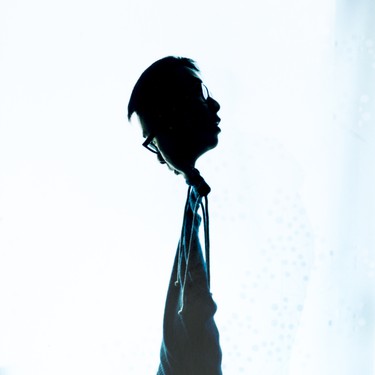
The Shadows of Chernobyl
Forty years after the 1986 Chernobyl disaster, I return to photographs I made there on black-and-white film in 1996–97. The series moves from interrupted play and abandoned rooms to names, uncertain presences and a child still growing: traces of what was lost, and of life that continued.
About Artist
Andrea Fadini
Andrea Fadini is an Italian photographer and visual author. He has worked professionally with photography since 1988, following a formation shaped by the darkroom, documentary practice and encounters with international photographers, including Magnum photographer Leonard Freed. Over more than four decades, he has worked throughout Italy and Europe, building an archive concerned with communities, territories, labour, social transformation and human presence. Today, however, the centre of his practice is not his curriculum, but time. For Fadini, a photographic archive never belongs entirely to the past. A photograph changes as the person looking at it changes. What may once have appeared as documentation, distance or simply observed reality can reveal different meanings many years later. Memory, therefore, is not nostalgia. It is a form of rewriting. Returning to a negative means looking at it through the eyes of the present, allowing experience, distance and time to alter our relationship with what was photographed. The image is not corrected to fit the present; rather, the present questions the image again. This idea lies at the heart of his current re-reading of the Chernobyl archive made in 1996–97. Thirty years after those photographs, and forty years after the disaster, the images no longer speak only of a contaminated place. They speak of absence, childhood, objects left behind, abandoned rooms, traces, interrupted lives and lives that continued. What began as reportage gradually becomes memory. The same enquiry runs through other parts of his archive: rural culture, the butteri, animals, labour, landscapes and the communities encountered over decades of photography. Not as a catalogue of a vanished world, but as material still capable of raising questions about the present. Fadini regards his archive as a living organism. Every image preserves the time in which it was made, while also containing possibilities that were not yet visible at the moment of exposure. To revisit an image is to allow it to enter the future again. From this perspective, photography is not simply a means of remembering what has been. It is a way in which the past continues to modify what we may become. Today Fadini works across analogue and digital photography, using Leica for his film-based practice and Nikon for digital work, while developing a parallel commitment to Fine Art printing. Through SAZEN, his practice also opens toward a generational future: connecting the experience and ethics of traditional reportage with younger photographers and new visual languages, so that the archive becomes not preservation, but transmission. Memory is not where images end. It is where they can begin again.

Related Entries
View All Entries